

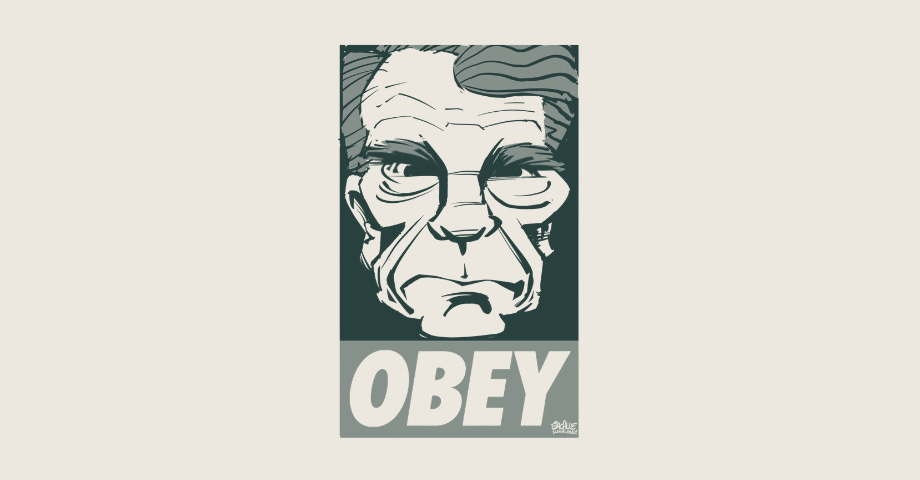
For decades, Springfield insiders told the same joke about House Speaker Mike Madigan.
“There’s only two ways he’ll leave office: In handcuffs or a casket.”
Indeed, Madigan held the speakership for 36 years. He held his seat as a state representative on Chicago’s Southwest Side for 50 years. He was, by all accounts, the most powerful state politician in U.S. history.
Residents paid a high cost for the machine Madigan maintained. Whether in the state’s unprecedented explosion of public debt, gerrymandered maps, autocracy in the Illinois House, or the culture of corruption fueled in part by his property-tax appeals business and dual role as party chairman.1
I spent years reporting on these costs, culminating in a feature-length documentary called “Madigan: Power. Privilege. Politics.” The film drew millions of views online, thousands of in-person screening attendees, and more than 200 references in traditional media. Chicago Sun-Times columnist Mark Brown called it a “must-see” for those involved in Illinois politics.
But Madigan never spoke of it. And never responded to a request for an interview.
He let his lawyers do the talking, instead.
Months after the film’s release, I was served a subpoena to produce any documents related to my interactions with Jason Gonzales—a subject featured in the final chapter of the documentary.
Gonzales had taken on the impossibly difficult challenge of running head-to-head against Madigan in the Democratic primary. He was the speaker’s first real opponent on his own turf since 1975. The demographics of Madigan’s district had changed dramatically since then, from a working-class Irish-American enclave to a working-class Mexican-American enclave. So in order to protect his seat against the insurgent Gonzales, Madigan recruited two “ringer” candidates on the same ballot who happened to have Hispanic last names: Joe Barboza and Grasiela Rodriguez.2
Gonzales sued Madigan for deploying this tactic. And Madigan saw that lawsuit as an opportunity to send a message.
I was ordered to sit for a deposition with Madigan’s lawyers. But the morning it was set to happen, a judge quashed the subpoena.3
I never heard from Madigan again. With two exceptions.
The first came after publishing the book I co-authored on Chicago government for Southern Illinois University Press, “The New Chicago Way: Lessons From Other Big Cities.” A local political figure told me Madigan had inquired about the findings of our chapter on the governance of Chicago’s convention complex, McCormick Place. I found it admirable that a man of Madigan’s age, experience, and stature was still personally gathering intelligence on public policy minutiae. Especially from his critics.
The last was an indirect reference. And it happened to be one of Madigan’s final quotes in public life.
“Some individuals have spent millions of dollars and worked diligently to establish a false narrative that I am corrupt and unethical,” he said. Weeks later, his own caucus ousted him as speaker and he stepped down as a state representative.
Madigan did not leave Springfield in handcuffs. And he didn’t leave in a casket. Rather, he was forced to leave office by his peers, who for the first time feared their constituents and federal investigators more than Madigan himself.
Soon after leaving office, Madigan was indicted on corruption charges. A jury found him guilty on 10 counts, including conspiracy, bribery, and wire fraud.
He currently resides at a minimum-security federal prison camp in Morgantown, West Virginia.
For a more complete picture of Madigan’s life and career, see my reflection in National Review: America’s Last Machine Boss Goes Down.
One of my favorite moments in Chicago media history is Carol Marin’s story on these two candidates. Marin knocks on Barboza’s door and asks his wife, “Is he really a candidate?” Her response, “Uh, I believe he is.”
This was an uncomfortable experience, by design. President Donald Trump deploys similar tactics against reporting he does not like, most recently threatening to sue the Center for American Progress for a report finding “no evidence that National Guard deployments have reduced violent crime.”
Wonderfully timely and appropriate subject matter this week! I have a feeling another lawsuit will be dropped before discovery and depositions, which will be a good time to link to your other documentary. https://www.youtube.com/watch?v=YbQ81mGucvs
Great. Has anything changed since Madigan's departure?
Your supposed to a good trooper and believe somehow "new machine" progressives, like Johnson & crew, are somehow different than the old school Madigan patronage machine. Who are the folks who buy into this narrative? Or, does anyone in city hall or Springfied care?