

When Garien Gatewood walked into a meeting with top mayoral aides on March 19, he thought he was there to finalize the paperwork putting one of his team members on a performance improvement plan.
He was actually walking into his own termination.
Gatewood served as Johnson’s first deputy mayor of community safety. But Chief of Staff Cristina Pacione-Zayas and Senior Adviser Jason Lee told him the administration was moving in a different direction. Gatewood was fired. Mayor Brandon Johnson never spoke to him directly. Gatewood’s deputy Manny Whitfield was fired the same day.
As Gatewood later put it, “This didn’t have anything to do with work. Just yesterday, they were tagging me on social media highlighting our work together.”
This personnel drama highlights what it looks like when a city’s public safety function is political rather than professional.
Readers of The New Chicago Way and The Last Ward know that’s not unique to Johnson’s administration. Rather, it’s baked into how Chicago government is structured.
‘Hostility toward law enforcement’
After speaking with sources close to the mayor’s office last week, it’s clear there are two main reasons Gatewood and Whitfield were fired. Both point to a public safety operation accountable to a political coalition rather than to outcomes.
First: Alyx Goodwin.
No outlet has named Goodwin as the employee at the center of the performance improvement plan (PIP) dispute. But we can confirm she was the employee in question.
Goodwin serves as a senior policy advisor in the Office of Community Safety. Before joining City Hall, she helped lead the Stop ShotSpotter campaign, the activist effort that preceded Johnson’s cancellation of the ShotSpotter contract.
Goodwin’s allies on the fifth floor include Kennedy Bartley, the mayor’s chief external affairs officer, who previously served as executive director of United Working Families, the Chicago Teachers Union-aligned organization instrumental in electing Johnson.
Bartley survived calls for her own firing in 2024 after podcast clips surfaced of her referring to police as “f---ing pigs,” and calling for the abolition of policing and prisons. The latter was captured on a recording with Goodwin.

Bartley and Goodwin stayed. Gatewood and Whitfield are gone.
When asked if there is a hostility toward law enforcement in the mayor’s office, Whitfield did not mince words.
“There is a hostility toward law enforcement among senior leadership in the mayor’s office,” he said.
Second: the gunshot detection contract.
In October 2025, Gatewood filed a formal complaint with Inspector General Deborah Witzburg accusing Pacione-Zayas and Lee—the two people who fired him—of improper interference in City Hall’s “contracting process.” The Chicago Sun-Times reported this but was careful not to specify which contracts.
One is almost certainly for a new gunshot detection system, replacing ShotSpotter.
Office of Public Safety Administration Executive Director Era Patterson told aldermen during November 2025 budget hearings that the scoring and recommendations for the replacement bids had already been submitted to the Chief Procurement Officer.
It’s now the end of March 2026. But there’s no contract. No announcement. And no explanation.
Why the delay?
If SoundThinking (the company behind ShotSpotter) scored highest in a professional evaluation—the one the mayor’s own process produced—awarding them the contract means admitting the city went 18 months without gunshot detection for a campaign promise that accomplished little to nothing.
That would be a significant political problem for an administration heading into election season.
One more detail: Lee, who delivered Gatewood’s termination, was previously recommended for firing by the same Inspector General — for threatening to withhold public safety services from an alderman who wouldn’t vote the mayor’s way. Johnson declined to act.
As Gatewood said, “There is a culture in this office where when you work to hold people accountable, you become a target.”
How to make Chicago policing more professional, less political
Chicago’s police governance is not working well.
“I came into this role, God’s honest truth, expecting to find a dirty police department that needed to be cleaned up,” said Community Commission for Public Safety and Accountability President Anthony Driver last year.
“What I found was a dirty city — and every aspect of the city of Chicago touches the Chicago Police Department.”
The drama surrounding the mayor’s office is just one part of a fragmented, confusing, and ineffective system. At least eight overlapping bodies can claim some kind of “police accountability” function in Chicago.1
Los Angeles, by contrast, has one primary body for police oversight. The LA Police Commission.2 Plus the City Council’s Public Safety Committee.
As The New Chicago Way co-author Ed Bachrach and I wrote in the Chicago Sun-Times, this model—in concert with a consent decree and changes to the city charter—helped bring LAPD from among the most infamous big-city police departments in America to among the best.3
With every killing, Chicago officials react somberly and predictably. But with the stark contrast in organization and results between Chicago and Los Angeles, any reasonable citizen would be justified in asking if our leaders are serious about professional policing, or if they prefer to keep it political.
For the current administration, the answer seems clear. They prefer to keep it political.
In the news
CTU fails to kill the audits lawsuit
A judge last week rejected CTU’s motion for summary judgment, meaning the case now moves to discovery. The CTU produced several years of audits but has failed to assure members they will abide by their own bylaws and release audits in the future. Here’s everything you need to know.
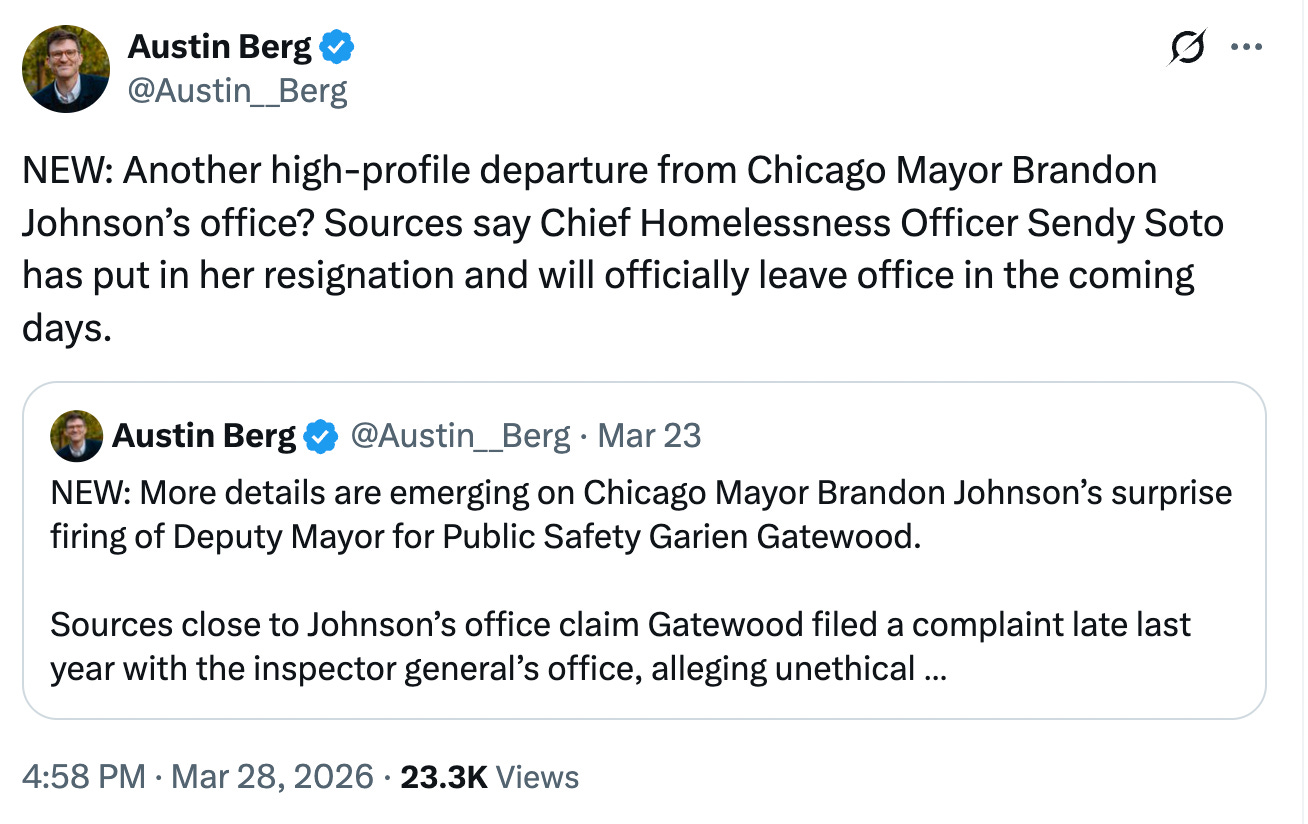
Chicago’s Chief Homelessness Officer is out
Sources say another senior leader in Johnson’s administration will be leaving shortly.
Mincing Rascals
I joined the Mincing Rascals on WGN to discuss the tragic murder of Loyola University student Sheridan Gorman, among other topics (YouTube, Apple, Spotify).
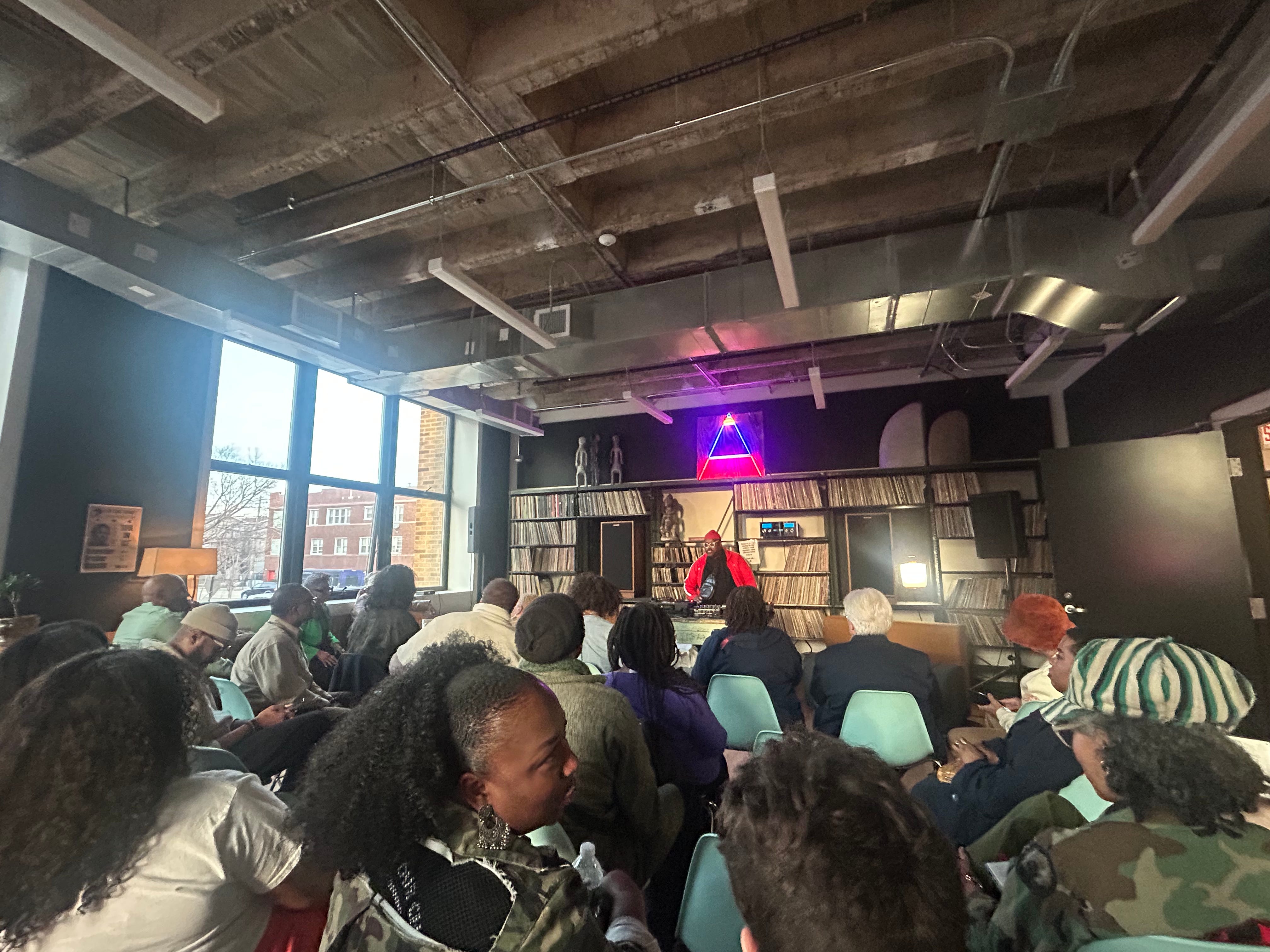
My “green light” recommendation: Duane Powell’s series at The Land School, “1976: A Retrospective.” Last week’s edition on the work of Chicago-born producer Charles Stepney was extraordinary. You can find the schedule here.
The Chicago Police Board, COPA, CCPSA, CPD’s Bureau of Internal Affairs, the Public Safety Section of the IG, the City Council’s Committee on Public Safety, the mayor’s Office of Public Safety, and the court-ordered Independent Monitoring Team overseeing implementation of CPD’s consent decree.
Sitting on the board are five unpaid commissioners appointed by the mayor and confirmed by City Council. Reporting to them are the chief of police, an executive director, a small staff, and the Office of Police Inspector General.
For a deeper discussion of how LA improved their police governance and achieved compliance with their consent decree, listen to our podcast interview with Richard Tefank, the longtime executive director of the LA Police Commission.
What exactly do these abolitionists think will happen if they get their way? Are they simply straight up anarchists? Are they anti-2nd Amendment too? Because if they get their heart’s desire, we’re all gonna be strapped up for the wild-wild-west!