

Chicagoans just witnessed a watershed moment in the city’s political history.
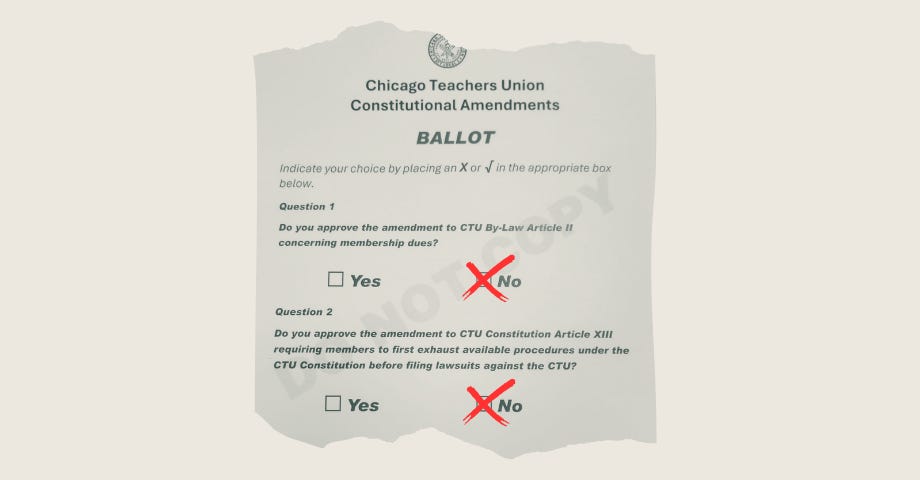
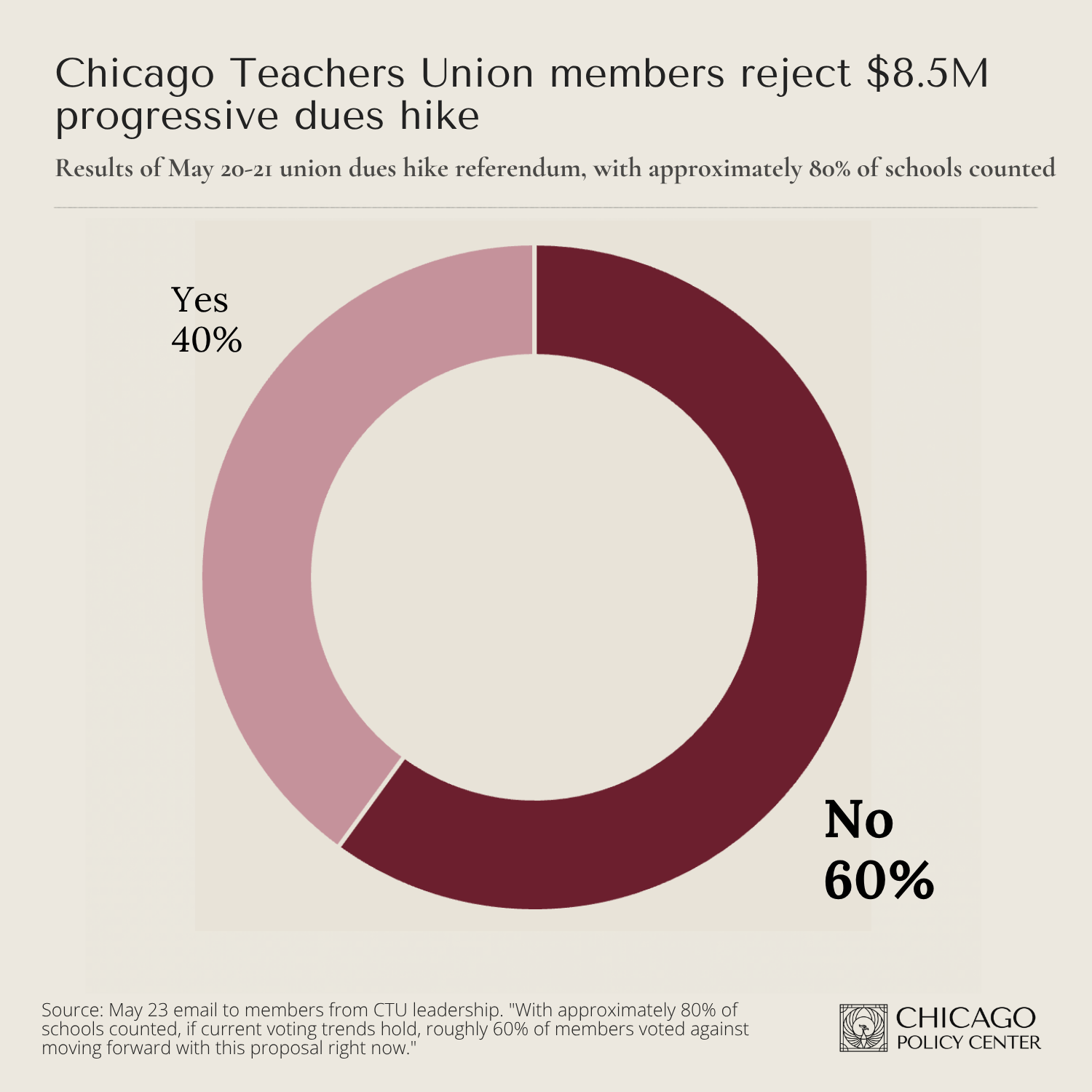
Chicago educators have dealt a stunning rebuke to Chicago Teachers Union President Stacy Davis Gates’ push for an $8.5M dues hike.
“With approximately 80% of schools counted, if current voting trends hold, roughly 60% of members voted against moving forward with this proposal right now,” according to an internal announcement sent to members.
In modern Chicago history, there are no examples of teachers union membership bucking leadership in a referendum of this magnitude.
As first reported in The Last Ward, CTU leaders cited political spending as the No. 1 reason for the proposed progressive dues hike, despite the union handbook’s insistence that member dues money is not used for political spending.
Gates’ announcement did not report results on the second question on the ballot. That initiative would have restricted members’ ability to sue the union.
Given the dues hike vote, it’s likely members rejected the second proposal as well.
Reaction to the vote
Our team broke news of the dues hike vote yesterday. Here are a few notable reactions:
“The fact that CTU members rejected a PROGRESSIVE dues hike is quite remarkable.“ – Rich Miller, CapitolFax
“Wow!“ – Mary Ann Ahern, NBC 5
“Huge news. Serious questions remain about how the Chicago Teachers Union can raise millions to fund candidates in 21 school board districts, re-elect Mayor Brandon Johnson, and defend its 20-some hard allies on the City Council.“ – Political consultant Frank Calabrese
“Potentially a very big deal. CTU already faces an uphill battle for the school board and to re-elect Mayor Brandon Johnson. If they’re not able to raise more money, they’re in much deeper trouble.“ – Greg Pratt, Chicago Tribune
“Well done.” – Illinois comptroller and likely Chicago mayoral candidate Susana Mendoza
Just as meaningful were the reactions from Chicago educators. Here are just a few texts from teachers on Saturday, following the announcement:
“Email from CTU!! The members have spoken!!! Woohoo!!!”
“I’m so happy they finally lost.”
“They’re acting as though it’s because members just didn’t understand. We do understand, they’re simply wrong.”
Veteran Chicago teachers like Ifeoma Nkemdi have worked to hold union leadership accountable for years. And faced harassment, ridicule, and false accusations as a result.
“Sometimes people fall in love with fighting,” Nkemdi said in the documentary Local 1. “That’s when I started to feel unmotivated to continue supporting the [CTU] agenda, because I just felt like they really enjoy fighting.”
Teachers like her were vindicated by this vote.
What this means for CTU leadership
Under Gates’ leadership, CTU has quadrupled its political spending.
The union and its affiliates were the No. 1 spenders on Chicago politics in the 2023 municipal elections. And in fiscal year 2025, the union spent over $4.2 million on “political activities and lobbying” — a record high since CTU started filing annual reports with the U.S. Labor Department, according to analysis from Mailee Smith at the Illinois Policy Institute.
Meanwhile, the union spends just 18 cents of every dollar on teacher representation.
Consequences of this vote for CTU’s political leadership include:
Gates will have fewer resources to back CTU’s own political staffer, Hilario Dominguez, in his run for school board president this November.
The same is true for Mayor Brandon Johnson, should he run for re-election in 2027.
Chicago City Council members will be less likely to vote with the mayor, given his top backer’s reduced capacity to fund Council races.
With petition signatures equivalent to 5% of membership (roughly 1,500 signatures), CTU members can send their own referenda to a union-wide vote. Given the dues hike vote, members may be encouraged to push referenda offering greater protection against the use of their dues money for politics, for example.
Gates also serves as president of the Illinois Federation of Teachers. There will now be increased scrutiny from teachers statewide on the use of their dues money for Chicago political races, given local members rejected a dues hike for that purpose.
Local polling and political races have increasingly shown CTU’s leadership has grown toxic.
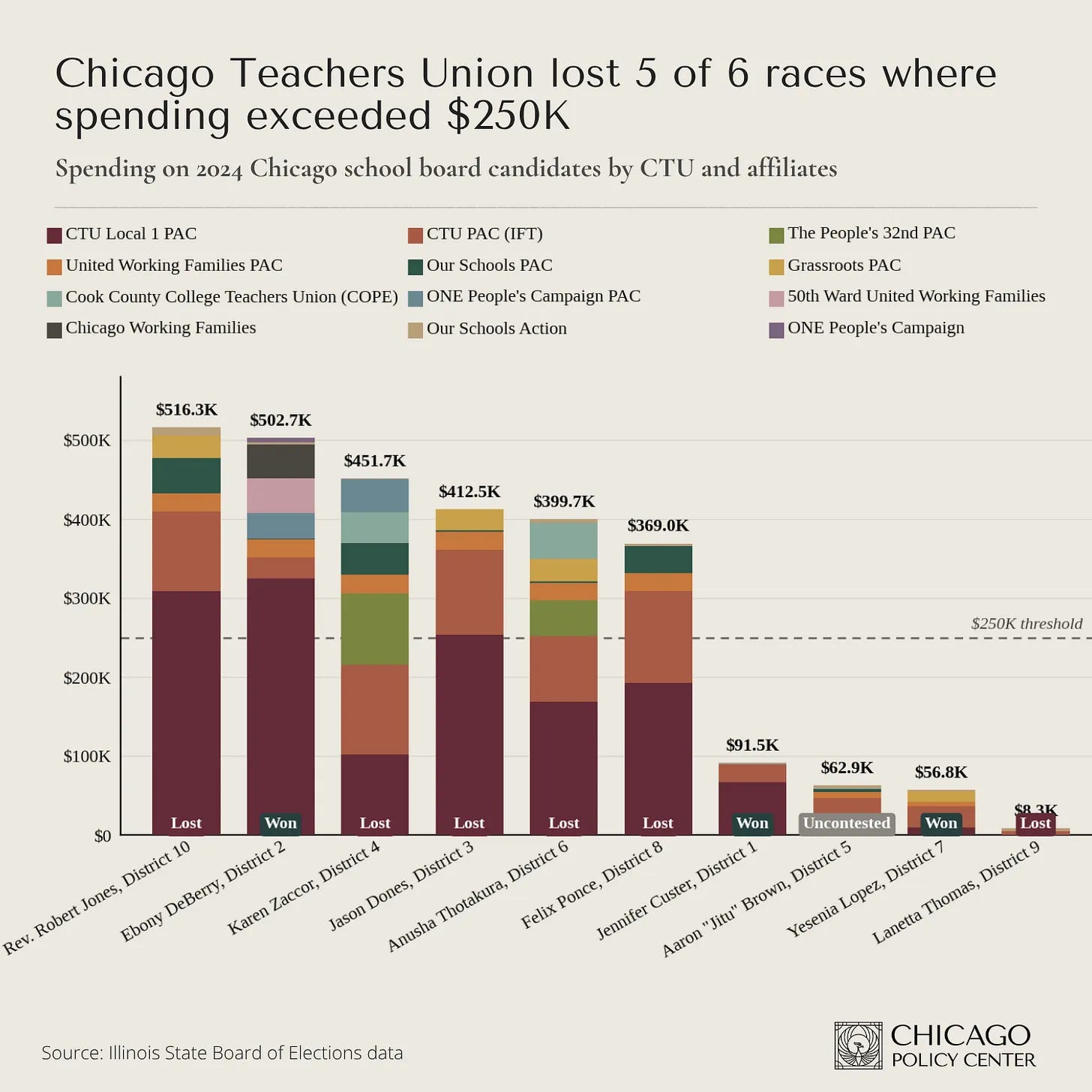
Indeed, CTU lost five of six races for school board in which the union and its affiliates spent more than $250,000 for their candidate.
For the last decade, Gates and her allies have been building a political machine fueled by members’ dues.
Teachers just sent the bill back.
In the news
I joined WTTW’s Chicago Tonight for a debate with Chicago Public Schools Board Member Michilla Blaise on the causes of Chicago Public Schools’ $732 million budget deficit, and potential solutions.
Blaise was originally appointed to the board by Johnson and is running for election in November.
Looks like Mendoza's running when she states:
--"“Well done.” – Illinois comptroller and likely Chicago mayoral candidate Susana Mendoza"
Will any other city or state dem pols now have the courage to speak up?