


The U.S. men’s national soccer team opened the 2026 World Cup Friday night with its greatest performance in modern history: a 4-1 drubbing of Paraguay.
But the tournament is a spectacle Chicago won’t be part of.
And the former mayor who made that call wants you to know he was right.
“We were on the front end of the bad side and the back end of the good side,” Rahm Emanuel told The Athletic.
“I said, ‘I don’t know what any other mayor or governor is doing, but do you expect me to treat the Chicago taxpayers as the dumb money at the table? You’ve got to be kidding me!’”
He wasn’t wrong. Emanuel read the deal correctly.
Here’s the problem: The call was his alone to make. And it’s only a matter of time before another deal, forged in secret with private interests, comes along.
Decision made in secret
The specific clause that broke the deal, according to the former mayor: FIFA insisted the contract include the right to demand a dome be built over the open-air Soldier Field.
When Emanuel told them to remove that clause, FIFA replied they never exercise it but couldn’t take it out.
“So I said there is not a chance I am going to have you directing me on a $50 million-$100 million expense to the taxpayers. That was the straw that broke the camel’s back,” according to Emanuel. “You can’t have something in there that leaves the city and the taxpayers exposed, where (FIFA) gets to decide it and I have no vote in it.”
The former mayor is right. This was a bad deal that could have committed Chicago taxpayers to hundreds of millions in open-ended obligations.
But it was being evaluated, negotiated, and ultimately rejected entirely within the mayor’s office.
At the time, Ald. Scott Waguespack called on the Emanuel administration to release the complete terms of the FIFA proposal and provide projections on the financial impact — noting pointedly that there had been “no discussion outside of the fifth floor.”
That Emanuel made the right call is worth crediting.
But the governance structure that allowed him to make that call unilaterally is the same structure that has produced some of the worst financial decisions in Chicago history.
A pattern Chicago keeps repeating
Consider the city’s pattern of poor deals with private entities for their use of public infrastructure:
Parking meters: In 2008, Mayor Richard M. Daley rammed the 75-year parking meter deal through the city council in 72 hours, costing Chicago billions.
Olympics: In 2009, Daley reversed his promise that Olympic hosting wouldn’t cost Chicago taxpayers a dime, signing a contract with the International Olympic Committee that put the city on the hook for any losses — with at least $1.75 billion in exposure.
NASCAR: In July 2022, Mayor Lori Lightfoot announced a three-year deal handing NASCAR the streets around Grant Park. Aldermen representing the wards affected by the deal were “purposefully and specifically excluded from any discussion” before the contract was signed, and only learned the terms when reporters obtained the document via FOIA. One alderman noted the city would receive less than $1 million from NASCAR for tying up downtown and Grant Park for more than a week — a fraction of what Lollapalooza pays annually for a comparable footprint.
As Ed Bachrach and I wrote in the Chicago Sun-Times, this pattern has a name. The practice of granting private parties the use of public property is called a concession. And Chicago has done a horrible job of managing those concessions:
All concessions involve a tradeoff between the public’s access to their public property and some other public interest. In Chicago, however, there is no mechanism to give weight to the public interest. The private concession almost always wins.
When the concession is conspicuous and egregious, like the parking meters and Grant Park, citizens and journalists ask all the proper questions. Why was this concession approved and others rejected? What were the alternatives? How were the terms determined? Was the public interest taken into account? What is the value of common use?
These vital questions are not publicly answered in Chicago, because they are always too late. The deal is cut in secret. And then, if City Council approval is needed, it is rammed through.
The FIFA host city agreement was on track to follow a similar pattern. No independent review. No public deliberation. Just whatever the fifth floor decides.
A better way to handle concessions
New Yorkers enjoy greater protection over their public assets than Chicagoans. That’s owed to New York City’s Franchise and Concession Review Committee, which:
Reviews and approves concession terms before they’re final.
Requires public notice, hearings, and a minimum 15-day comment period for concession deals.
Publishes annual concession plans that include every concession action planned by every city agency, so the public can see what’s coming before negotiations even begin.
Is not entirely captured by the mayor: While the commission is primarily made up of mayoral appointees, the independently elected comptroller also sits on the commission. And borough presidents get to vote on deals that affect their communities.
This structure is baked into New York’s city charter. Chicago does not have a charter, and requires a change in state law to adopt one.
Short of a charter, Chicago City Council should establish a standing concession commission with authority over these kinds of arrangements, requiring public proceedings before deals are signed.
Until then, Chicago’s protection against bad mega-deals is a mayor with good judgment.
That’s what ensured FIFA didn’t take advantage of Chicago.
But next time, private interests could slip a bad deal past the keeper.
In the news
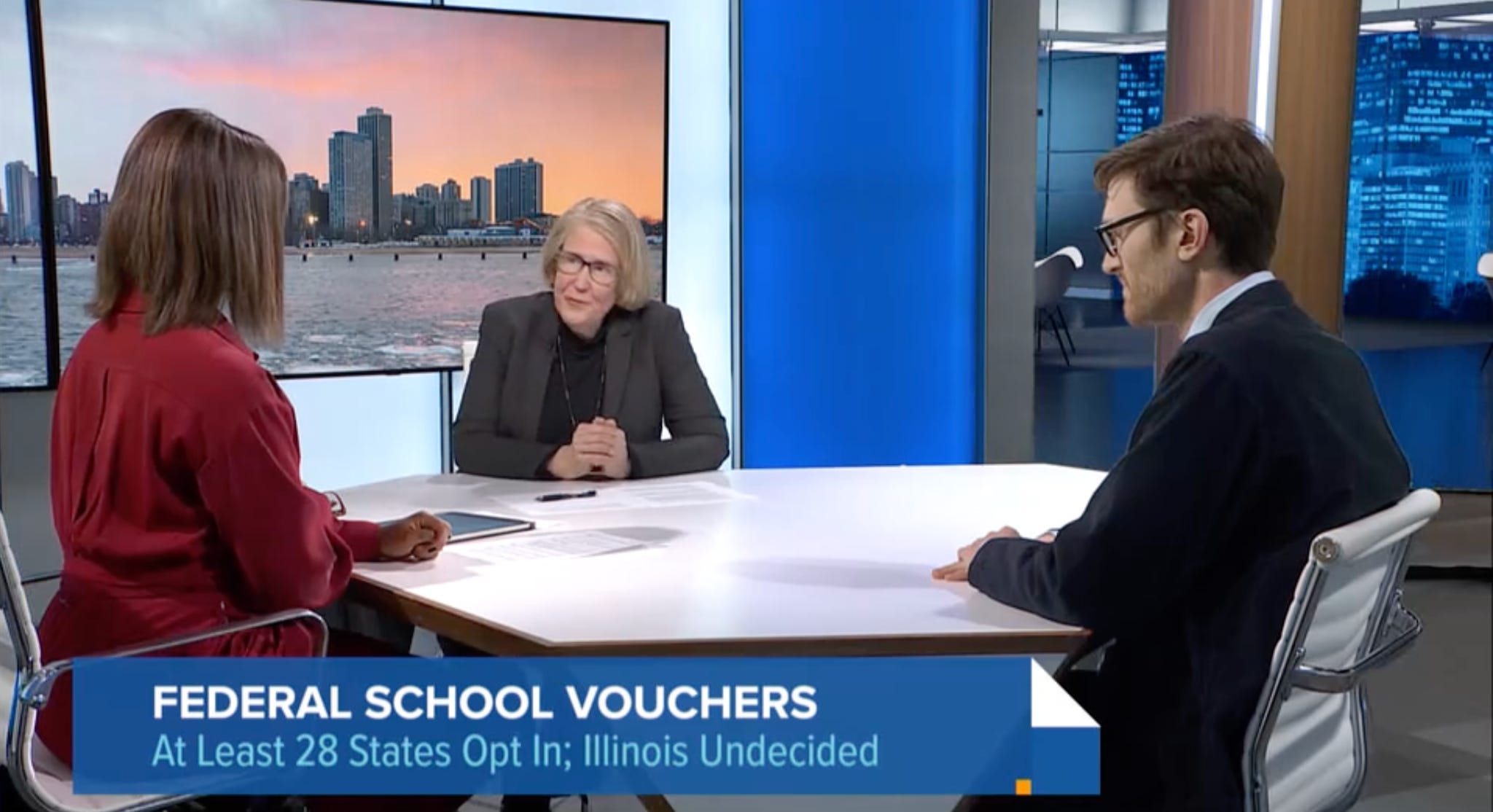
Update on opting in: Readers of The Last Ward know why Illinois should opt in to the new federal tax credit for education donations (“How Democrats can unlock $100M+ for Chicago education without tax hikes”). But the Chicago Teachers Union has urged Gov. JB Pritzker to stay out, calling the program “a scam designed to undermine public education.”
Notably, one of the most prominent voices against private school vouchers, Michigan State University Prof. Josh Cowen, just came out in support of opting in.
“I’m not willing to leave public school families and public school educators alone on the road we’re heading down by telling them there’s nothing in the federal scholarship for them,” Cowen wrote.
Mayoral candidate pushing common sense reforms: Chicago mayoral candidate Liam Stanton published his campaign’s “Common Sense Government Reforms” platform last week, including changing the city’s election timing and creating a city charter.
Teen takeovers: Teen takeovers may be the most prominent public safety topic in Chicago. Political consultant Sabha Abour recently interviewed two young men who have been organizing them — it’s worth your time.
And here’s what Chicago can learn from Washington D.C.’s successful response to teen trends.